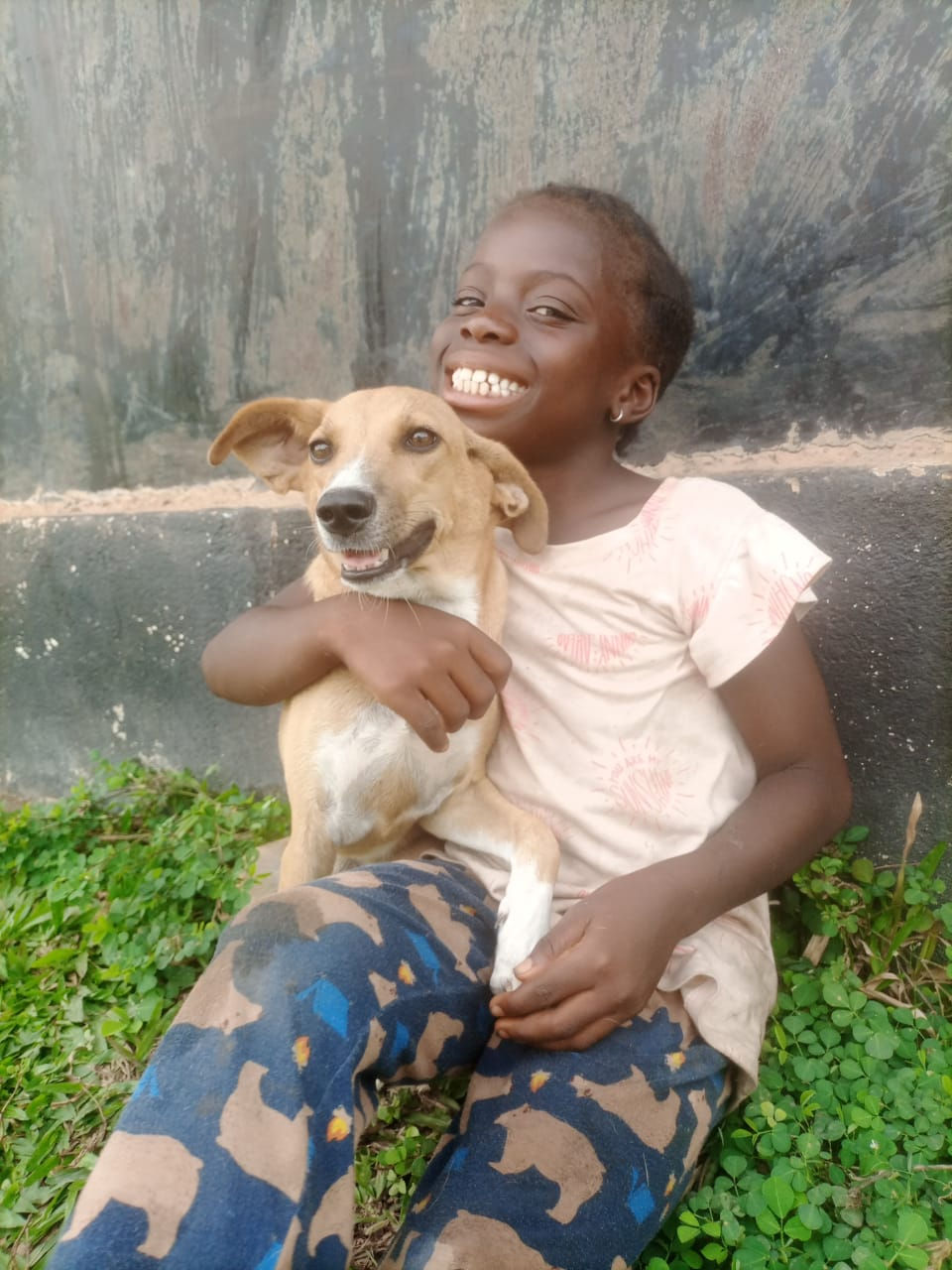
How Humane Education is changing the way people in Liberia treat animals

In the last AKI Blog post about AKI Partner Liberia Animal Welfare & Conservation Society (March 2026), we introduced the Monitoring, Evaluation, & Learning (MEL) Plan being developed by an AKI volunteer and LAWCS. We've been supporting the LAWCS Humane Education Program for ten years, and we wanted to find out more about the results of our support and the lessons we could learn, about Humane Ed in general and specifically, in Liberia.
LAWCS staff (Anna, Alex, and Paul) interviewed teachers, students, and community members who have participated in the LAWCS Humane Ed Program (see the video below of one of their interviews, and visit our Youtube channel to watch more).
Now, we have some results from the MEL surveys, including these quotes, which are representative of the type of information generated in the one-on-one interviews:
Female student alumnus, Montserrado: I really did not think that animals had feelings and I did not have any feelings for them whenever I saw it. After the programme this changed.
Female student alumnus, Montserrado: I used to feed my animals with spoiled food, sometimes dead rats and other rotten stuff. [You have changed from that?] Yes. I now feed fresh food and water.
Male student alumnus, Voinjama: I didn't know that animals need to eat in a very clean area. I didn't know that animals should be sleeping in a very clean area. I didn't know that animals should be treated with medication. But with training I came to understand directly that animals are not just to be used as a source of income. We should treat animals as our friends.
Male student alumnus, Voinjama: When we are passing in the community and we see that people are treating animals wrong, I come down, speak to them — they're not supposed to be like this. You don't have to beat the animal like this, you don't have to beat the animal. Treat them well.
Male teacher, Montserrado: Some people copy from others, living by example inspires others to do the same. I have sympathy for animals. Sometimes I used my story as an example to inspire others who act wicked to animals.
Female teacher, Montserrado: I say we should not treat them badly, we should treat them well. Because those animals have feelings. Some of the kids say the good things they do for their animals. Most of them are changing and doing good instead of bad.
Community member, Voinjama: The overall general treatment of animals in this community has changed over the years with the training.
We'll have more data, interviews, and results to share as we move ahead with the MEL Plan.
Meanwhile, LAWCS, with funding from AKI, continues to hold animal care clinics in remote locations and sponsor school- and community-based animal welfare education. For example.....
In July, LAWCS organized a 4 day free animal healthcare clinic in Zozor. Over time, there's been a huge transformation in Zorzor thanks to LAWCS clinics and humane ed. It used to be that people wouldn't allow you to take photos of them with their pets. Now, most are excited to have a picture taken with their cat or dog.

Over the 4 days, LAWCS treated 523 dogs and cats! Animals were checked and treated for worms, ticks and fleas, sore ears, wounds, mange, and more.

On August 26, International Dog Day, during a heavy downpour, the LAWCS team was out celebrating the day by providing food, collars, leashes, health checks and treatment to about 200 dogs, along with responsible pet ownership education for their owners. All sponsored by Animal-Kind International and our donors!


We welcome and are very grateful for your contribution to Liberia Animal Welfare & Conservation Society's Humane Ed and Animal Care Clinics:
THANK YOU!